SASSA SRD R350 Grant Increase 2026: What Applicants Need to Know. Financial stability is a major concern for millions of South Africans. As the cost of living continues to rise, many citizens rely on social security support to meet their basic needs. One of the most searched topics regarding social relief is the potential adjustment to grant amounts. Specifically, applicants are looking for information regarding the SASSA SRD R350 Grant Increase 2026.
The South African Social Security Agency (SASSA) administers various grants to support vulnerable groups. Among these, the Social Relief of Distress (SRD) grant has become a lifeline for unemployed individuals. While the grant was initially set at R350, there is ongoing public discussion about whether this amount will be adjusted in upcoming budget cycles, including projections for 2026.
Why does this matter to you as an applicant? Understanding the potential for a SASSA SRD R350 Grant Increase helps you plan your household budget effectively. It also ensures you stay informed about your rights and the latest government announcements. This guide provides authoritative, accurate, and actionable information to help you navigate the application process, eligibility criteria, and what to expect regarding payment adjustments.
SASSA SRD R350 Grant Increase and Why It Matters
The conversation surrounding the SASSA SRD R350 Grant Increase is driven by economic factors such as inflation and the rising cost of food and transport. When applicants search for terms like sassa r350 increase or sassa srd increase, they are essentially asking if the current support level will be sufficient to cover future expenses.
Understanding the Current Grant Structure
The SRD grant was introduced as a temporary measure to assist those who have no other means of support. Currently, the payment is widely known as the R350 grant, though adjustments have been made periodically to account for inflation. For example, temporary increases have occurred in the past to help beneficiaries cope with specific economic pressures.
When discussing the SASSA SRD R350 Grant Increase 2026, it is important to understand that grant amounts are determined during the annual National Budget Speech. The Minister of Finance announces any changes to social grants usually in February each year. Therefore, while users search for 2026 specifics, the confirmed amounts are typically ratified closer to the financial year.
Who the SASSA SRD R350 Grant Increase is For
The primary focus of any increase discussion is the unemployed adult who falls outside the standard social grant system. This includes individuals who do not qualify for the Old Age Grant, Disability Grant, or Child Support Grant. The SRD grant fills this gap.
However, discussions about increases often extend to other grants as well. Beneficiaries of the Child Support Grant, Foster Care Grant, and Disability Grant also look for annual adjustments. When the government announces a percentage increase for social security, it often applies across the board, affecting the broader SASSA payments ecosystem.
What the Grant Covers Financially
The purpose of the SRD grant is to provide temporary relief for basic food needs. It is not designed to cover rent, utilities, or debt repayments entirely. If a SASSA SRD R350 Grant Increase is implemented, the additional funds are intended to offset the rising cost of a basic food basket.
For other grants, such as the Disability Grant or Old Age Grant, the funds cover a wider range of living expenses, including medication, transport to clinics, and caregiver support. Understanding what your specific grant covers helps you manage expectations regarding how much an increase will impact your overall financial situation.
Who This Topic Applies To
Search intent for the SASSA SRD R350 Grant Increase 2026 comes from various demographic groups. Each group has unique needs and concerns regarding social security support. Identifying where you fit helps you understand which rules and updates apply to your situation.
Unemployed Individuals Seeking SRD Relief
The largest group searching for sassa srd r350 grant information consists of unemployed South Africans between the ages of 18 and 60. These individuals may have lost jobs due to economic downturns or have never been employed. They rely on the SRD grant as their primary source of income. For this group, even a small increase in the grant amount can significantly impact their ability to purchase nutritious food.
Students Needing Temporary Relief
Many students in South Africa face gaps in funding. While NSFAS covers tuition and allowances for eligible students, there are often delays or students who do not qualify for full funding. These students may apply for the SRD grant as supplemental support. They are highly interested in the sassa r350 increase because their budgets are extremely tight, often balancing study costs with living expenses.
Parents and Guardians
Parents receiving the Child Support Grant often look for information on broader SASSA adjustments. While the SRD grant is for adults, household income affects eligibility for means-tested grants. Guardians managing Foster Care grants also monitor announcements closely. An increase in overall social security spending often signals better support structures for children in vulnerable homes.
Elderly Citizens and Persons with Disabilities
Although the SRD grant is not for the elderly or disabled specifically, these groups monitor SASSA news closely. They are concerned with the Old Age Grant and Disability Grant amounts. However, many elderly citizens assist their unemployed grandchildren. Therefore, news about the sassa srd r350 increase is relevant to them as it affects the overall household income available for shared expenses like electricity and food.
Requirements and Eligibility SASSA SRD R350 Grant Increase
To benefit from any grant, including potential adjustments under the SASSA SRD R350 Grant Increase 2026 framework, you must meet strict eligibility criteria. SASSA uses a means test to ensure funds go to those who need them most. Failing to meet these requirements will result in a declined application, regardless of any grant increase announcements.
Citizenship and Residency
You must be a South African citizen, permanent resident, or refugee registered on the Home Affairs database. Visitors or individuals on temporary visas do not qualify for the SRD grant. SASSA verifies your identity against the Department of Home Affairs records. If your ID status is not updated, your application may be flagged.
You must also reside within South Africa. If you leave the country for an extended period, your grant may be suspended. This residency requirement ensures that social security funds support the local economy and residents facing local economic hardships.
Means Test and Income Thresholds
The core requirement for the SRD grant is the means test. Currently, applicants must not have any other source of income. This includes employment, pensions, or other social grants. The income threshold is strict. If you earn even a small amount above the designated threshold, you will not qualify.
For the SRD grant, the threshold is generally set around R624 per month. This amount is assessed based on bank statements and other financial data. When discussing a sassa r350 grant increase, the means test thresholds may also be reviewed. However, the primary rule remains: you must prove you have no sufficient means of support.
Age Requirements
Applicants for the SRD grant must be between the ages of 18 and 60. Individuals under 18 are typically expected to be supported by parents or guardians through the Child Support Grant. Individuals over 60 qualify for the Old Age Grant, which has different requirements and usually higher payment amounts.
It is crucial to apply for the correct grant based on your age. Applying for the SRD grant when you qualify for the Old Age Grant can lead to delays. SASSA systems will detect your age and may redirect you to the appropriate application channel.
Special Cases and Existing Grant Recipients
You cannot receive the SRD grant if you are already receiving another social grant. This includes the Disability Grant, Care Dependency Grant, or Foster Care Grant. The SRD is designed for those with no other safety net.
However, there are special cases regarding unemployment insurance. If you are receiving UIF payments, you generally cannot qualify for the SRD grant. You must wait until your UIF benefits expire before applying for social relief. This rule prevents double-dipping into state funds.
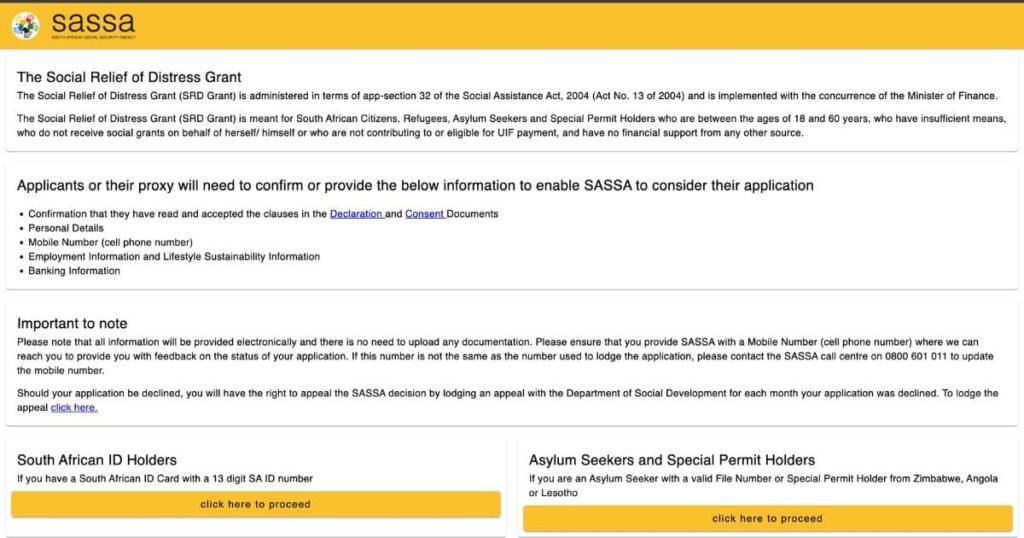
How to Apply for SASSA SRD R350 Grant Increase (Step-by-Step Process)
Applying for the grant is the first step toward securing support. Whether there is a confirmed SASSA SRD R350 Grant Increase 2026 or not, the application process remains largely the same. Following the correct steps ensures your application is processed without unnecessary delays.
Step 1: Gather Your Information
Before starting the SASSA application, ensure you have your South African ID number and a working mobile phone number. The phone number must be registered in your name. SASSA uses this number for One-Time Pins (OTPs) and status updates.
You will also need your banking details. While SASSA offers cash send options, having a personal bank account is faster and safer. Ensure your bank account is active and in your name. Third-party accounts are generally not accepted for payment deposits.
Step 2: Choose Your Application Channel
There are multiple ways to apply. The online portal is the most common method. You can visit the official SRD website. Alternatively, you can use the USSD code 1203210# from your mobile phone. There is also a WhatsApp line available for applications.
For those who are not tech-savvy, visiting a SASSA local office is an option. However, online applications are encouraged to reduce queues and processing times. Whichever method you choose, ensure you are using official channels to avoid scams.
Step 3: Complete the Online Form
If applying online, navigate to the SRD grant section. Enter your ID number and phone number. You will receive an OTP via SMS. Enter this pin on the website to verify your identity.
Fill in all personal details accurately. This includes your address, living situation, and income details. Be honest about your employment status. SASSA cross-checks this information with other government databases. Discrepancies can lead to automatic rejection.
Step 4: Submit Banking Details
Once your identity is verified, you must provide banking details. You can choose to be paid via direct bank deposit, cash send, or Post Office collection. Direct deposit is recommended. Enter your bank name, account number, and branch code.
Double-check these details. Incorrect banking information is a leading cause of payment failures. If you do not have a bank account, select the cash send option, but be aware that this may involve collection fees or longer waiting times at pay points.
Step 5: Confirmation and Status Check
After submission, you will receive a confirmation message. Keep your reference number safe. You can perform a SASSA status check using your ID and phone number on the official website. This allows you to track whether your application is pending, approved, or declined.
Regularly check your status. If your application remains pending for a long time, it may indicate that further verification is needed. Staying proactive helps you resolve issues before payment dates arrive.
Documents Needed SASSA SRD R350 Grant Increase
While the SRD application is largely digital, having the right documentation ready is essential for verification. If your application is flagged for manual review, you may be asked to submit proof of your circumstances. Understanding the document requirements prevents delays in receiving your sassa srd r350 grant.
Identity Documentation
A valid South African Green ID Book, Smart ID Card, or valid Passport is required. For refugees, a valid asylum seeker permit or refugee status document is necessary. The ID number provided in the application must match the physical document exactly.
If you have lost your ID, you must apply for a temporary ID at Home Affairs before proceeding with your SASSA application. Without valid identification, SASSA cannot verify your citizenship or age, which are mandatory eligibility criteria.
Proof of Income and Means Test
You may be asked to provide bank statements for the last three months. These statements must show that you do not receive regular income above the threshold. Highlight any deposits clearly. If you have no income, the statement should reflect this.
Self-employed individuals may need to provide an affidavit stating their income level. This affidavit must be commissioned at a police station or by a commissioner of oaths. It serves as a legal declaration of your financial status.
Proof of Residence
SASSA may require proof of where you live. This can be a utility bill, a lease agreement, or an affidavit from a local community leader confirming your address. The address must match the one provided in your application.
This document helps SASSA verify that you reside within South Africa. It also assists in assigning you to the correct pay point if you choose cash collection options. Ensure the document is recent, typically not older than three months.
Certification Rules and Validity
All copies of documents submitted must be certified. A certified copy is a duplicate of an original document that has been stamped and signed by a commissioner of oaths. Uncertified copies are often rejected during manual verification processes.
Certifications are usually valid for three to six months. If your documents are too old, you may need to get them re-certified. Do not alter or edit any documents. Fraudulent documentation leads to permanent blacklisting from SASSA services and potential legal action.
File Formats and Upload Tips
When uploading documents via the portal or WhatsApp, use clear file formats. PDF and JPEG are the most accepted formats. Ensure the text on the document is legible. Blurry photos or cropped images may cause verification failures.
Keep file sizes reasonable. Very large files may fail to upload on mobile data connections. If you are scanning documents, use a standard resolution that balances clarity with file size. Name your files clearly, such as ID_Copy.pdf or Bank_Statement.pdf, to help administrators process them faster.
Common Problems and Solutions
Applicants often face challenges during the application and payment process. Understanding common errors related to the SASSA SRD R350 Grant Increase queries can help you troubleshoot effectively. Most issues have standard solutions if addressed promptly.
Application Status Errors
A common issue is seeing a status of “Pending.” This means SASSA is still verifying your details against government databases. It does not necessarily mean you are declined. However, if it remains pending for months, you should contact SASSA to inquire.
Another common status is “Declined.” This usually happens if the means test shows income above the threshold or if your ID details do not match Home Affairs records. You have the right to appeal a declined application. The reconsideration process allows you to submit additional information to prove your eligibility.
Payment Delays and Banking Issues
Sometimes, approved beneficiaries do not receive their sassa payments on the expected date. This can be due to banking system errors or incorrect account details provided during application. If your payment fails, check your banking details on the SASSA portal.
Ensure your bank account is not dormant. Some banks close accounts that have no activity for a long period. If your account is closed, update your details with SASSA immediately to switch to a different payment method. Delayed updates can result in missed payment cycles.
Reconsideration and Appeals Process
If your application is rejected, you can lodge an appeal. This must be done within a specific timeframe, usually 30 days from the date of decline. Visit the SRD website and select the reconsideration option.
Provide a clear reason for your appeal. If you were declined due to income, upload fresh bank statements showing no income. If it was an identity error, provide certified ID documents. The Independent Tribunal for Social Assistance Appeals (ITSAA) reviews these cases.
Identity Verification Failures
Many applicants face issues where their ID number is flagged as already existing in the system. This can happen if you applied previously or if there is a duplicate entry. Contact SASSA support to resolve duplicate profiles.
Biometric verification may also be required. This involves visiting a SASSA office to scan your fingerprints. This step confirms that you are the real owner of the ID number. It is a security measure to prevent fraud and identity theft within the grant system.
Important Tips and Warnings on SASSA SRD R350 Grant Increase
Navigating the social grant system requires caution. There are many misinformation campaigns and scams targeting vulnerable applicants. Protecting your personal information is just as important as applying for the grant itself.
Avoiding Scams and Fraud
Never pay anyone to apply for a SASSA grant on your behalf. The application process is free. Agents who claim they can expedite your sassa srd grant increase for a fee are running a scam. Only use official SASSA channels.
Be wary of SMS messages or WhatsApp links asking for your PIN or password. SASSA will never ask for your banking PIN. If you receive a suspicious message, verify it by calling the official SASSA toll-free number. Protecting your ID number and bank details prevents identity theft.
Payment Dates to Watch
SASSA releases payments in staggered batches. Older persons usually get paid first, followed by disability grants, and then child support. SRD grant payments often follow a specific schedule announced at the start of each month.
Check the official sassa payment dates regularly. These dates can change due to public holidays or weekends. Knowing your specific payment window helps you plan when to withdraw cash or check your bank account. Missing a payment cycle due to not checking dates can cause unnecessary financial stress.
Mistakes That Lead to Rejection
Providing incorrect phone numbers is a major cause of application failure. If you change your number, update it on the SASSA portal immediately. You need access to this number for OTPs and communication.
Another mistake is failing to reconfirm your need for the grant. SRD beneficiaries are often required to reconfirm their eligibility every few months. If you do not log in to confirm you still need the relief, your grant may be suspended. Set a reminder to check your status regularly.
Keeping Details Updated
Life circumstances change. If you find employment, you must inform SASSA. Continuing to receive the grant while employed is considered fraud. Conversely, if your situation worsens, ensure your records reflect your current address and contact details.
Regularly logging into your profile ensures your data is current. This proactive approach minimizes the risk of payment interruptions. It also ensures you receive notifications about any potential SASSA SRD R350 Grant Increase announcements directly.
Frequently Asked Questions (FAQ) on SASSA SRD R350 Grant Increase
Applicants often have specific questions regarding the grant and potential adjustments. Below are answers to common queries based on search intent and official guidelines.
Will the SASSA SRD R350 Grant Increase in 2026?
Grant amounts are reviewed annually during the Budget Speech. While there is public demand for a SASSA SRD R350 Grant Increase, no specific amount for 2026 has been permanently legislated yet. Applicants should monitor official government announcements in February each year for confirmed adjustments.
How can I check my SASSA status?
You can perform a SASSA status check on the official SRD website. You will need your ID number and the phone number used during application. This tool shows if your grant is approved, pending, or declined.
What do I do if my application is declined?
If declined, you should lodge an appeal for reconsideration. Visit the SRD website and follow the appeals process. Provide any additional documents that prove you meet the means test requirements. Do not submit a new application; appeal the existing one.
Can I receive the grant if I have a bank account?
Yes, having a bank account is preferred. You must provide accurate banking details for direct deposits. If you do not have an account, you can choose cash send options, but a personal account is more secure for receiving sassa payments.
Is the SRD grant permanent?
The SRD grant is legislated as temporary relief. However, it has been extended multiple times due to ongoing economic challenges. Its continuation depends on government budget allocations and parliamentary approval each year.
How much is the current grant amount?
The grant is commonly referred to as the R350 grant. However, amounts can be adjusted temporarily for inflation. Always check the latest announcement on the SASSA website for the exact current payment figure before budgeting.
Can I apply if I am receiving UIF?
No, you cannot receive the SRD grant if you are receiving UIF benefits. You must wait until your UIF payments stop. The systems are linked, and double payments will be detected and recovered.
What happens if I change my phone number?
You must update your phone number on the SASSA portal. If you do not, you will not receive OTPs required for status checks or banking detail changes. This can lock you out of your account.
Do students qualify for the SRD grant?
Yes, students qualify if they are unemployed and meet the means test. Receiving NSFAS funding may affect eligibility depending on the amount received. You must declare all sources of income during application.
Where can I find official sassa payment dates?
Official payment dates are published on the SASSA website and communicated via SMS to beneficiaries. Avoid relying on unofficial social media pages, as they may post incorrect information.
Conclusion
Navigating the social security system requires patience and accurate information. While many South Africans are hopeful for a SASSA SRD R350 Grant Increase 2026, it is vital to rely on official budget announcements rather than rumours. The primary goal is to ensure that eligible citizens receive the support they are entitled to without interruption.
Whether you are applying for the first time or are an existing beneficiary, keeping your details up to date is crucial. Regular status checks, accurate banking information, and awareness of payment dates will help you manage your finances better. Remember that the application process is free, and you should never share your personal PINs with anyone.
Stay informed through official channels. By understanding the requirements and avoiding common pitfalls, you can secure your grant relief effectively. We encourage all eligible citizens to apply if they meet the criteria and to remain vigilant against fraud. Your financial well-being matters, and knowing your rights is the first step toward stability.
3. How To Apply For SASSA SRD R350
4. Is SASSA R370 Grant Still Available?