South Africa Social Relief Grant Application Process 2026. Navigating the social security system in South Africa can be complex, especially when planning for future financial support. This comprehensive guide details the South Africa social relief grant application process 2026 to help you prepare accurately. The South African Social Security Agency (SASSA) remains the primary body responsible for distributing social grants to vulnerable citizens. Understanding the correct procedures now ensures you are ready when the application windows open.
Why does this matter to you? Accessing these funds can mean the difference between financial stability and hardship for millions of South Africans. Whether you are seeking temporary relief due to unemployment or applying for long-term support like a disability grant, knowing the exact requirements prevents delays. This article serves as an authoritative resource to guide you through every step, from eligibility checks to receiving payments.
What Is SASSA and Why It Matters
The South African Social Security Agency, commonly known as SASSA, is a government agency established to manage the distribution of social grants. Its mandate is to provide financial assistance to those who are unable to support themselves and their families. SASSA plays a critical role in the South African economy by reducing poverty and providing a safety net for the most vulnerable populations.
SASSA is designed for citizens who meet specific criteria regarding income, age, and disability status. The agency ensures that funds reach those who need them most through a rigorous means test and verification process. Without this agency, many households would lack the basic resources required for food, healthcare, and shelter.
Financial Coverage and Grant Types
SASSA covers a wide range of financial support options. The most well-known is the Social Relief of Distress (SRD) grant, often referred to as the R350 grant. This is temporary assistance for unemployed individuals with no other income. However, SASSA also manages permanent grants.
These include the Old Age Grant for seniors, the Disability Grant for persons unable to work due to physical or mental conditions, and the Child Support Grant for guardians of children. There is also the Foster Care Grant for children placed in foster care by court order. Each grant has its own specific set of rules, but all fall under the umbrella of the South African Social Security Agency.
Understanding which grant you qualify for is the first step in the south africa social relief grant application process 2026. Applying for the wrong grant can lead to automatic rejection. Therefore, identifying your specific needs and matching them to the correct SASSA product is essential for a successful application.
Who This Topic Applies To
This guide is designed to assist various demographics within South Africa. The social relief grant application process is not one-size-fits-all. Different groups have different needs and eligibility pathways. Identifying which category you fall into helps streamline your application.
Unemployed Individuals Seeking SRD Relief
The primary audience for the SRD grant is unemployed individuals between the ages of 18 and 60. This group often faces temporary financial distress and requires immediate intervention. If you have lost your job or cannot find employment, this grant is designed to provide temporary bridging income.
This category includes youth who have entered the job market but cannot secure work. It also includes adults who have been retrenched. The key criterion here is the lack of any other income source. If you receive any other form of government support or have a taxable income, you may not qualify for this specific relief.
Students Needing Temporary Relief
South African students often face gaps in funding while waiting for NSFAS disbursements or bursary payments. While SASSA does not fund tuition directly, students may qualify for the SRD grant if they meet the income criteria. This provides supplemental support for food and transport while studying.
Students must be careful to declare their status accurately. If you receive a stipend that exceeds the means test threshold, you might be ineligible. However, for those without any funding, this relief is vital for continuing education without severe hunger or financial stress.
Parents and Guardians
Parents or guardians assisting with Child Support or Foster Care grants are also central to this topic. While the SRD grant is for individuals, guardians often apply for child-related grants to support their dependents. In some cases, a guardian may apply for the SRD grant for themselves while simultaneously managing child support grants for their children.
Understanding the distinction between grants for yourself and grants for your dependents is crucial. Mixing these applications can cause confusion in the system. This guide helps clarify how to manage multiple applications within the same household without triggering compliance flags.
Elderly Citizens and Persons with Disabilities
Elderly citizens and persons with disabilities require long-term stability rather than temporary relief. For this group, the south africa social relief grant application process 2026 involves applying for permanent grants like the Old Age or Disability Grant. These grants provide higher monthly amounts compared to the SRD grant.
This demographic often requires assistance with the application process due to mobility issues or lack of digital access. SASSA provides in-person options specifically to accommodate these groups. Ensuring that medical reports and identity documents are in order is particularly important for disability claims.
Requirements and Eligibility South Africa Social Relief Rrant Application
Meeting the requirements is the foundation of a successful application. SASSA employs a strict means test to ensure funds are allocated fairly. Failing to meet even one criterion can result in a declined application. It is vital to review these requirements thoroughly before submitting your details.
Citizenship and Residency
To qualify for any SASSA grant, you must be a South African citizen, permanent resident, or refugee with valid documentation. You must also reside within South Africa. SASSA does not provide grants to individuals living outside the country, even if they are citizens.
Proof of residency is often verified through your identity document address or supplementary documents like utility bills. If you have recently moved, ensure your details are updated with the Department of Home Affairs. Discrepancies between your ID address and your current living situation can delay verification.
Means Test and Income Thresholds
The means test is a financial assessment used to determine if you earn too much to qualify for aid. For the SRD grant, you must have no other income source. This includes wages, pensions, or other social grants. For permanent grants like the Old Age Grant, there is a specific income threshold you must not exceed.
Bank accounts are scrutinized during this process. SASSA checks your bank statements to verify your declared income. If you have regular deposits that suggest employment or business income, you may be deemed ineligible. It is important to be honest about your financial situation to avoid future penalties.
Age Requirements
Age is a critical factor in determining which grant you can apply for. The SRD grant is specifically for adults aged 18 to 60. Once you turn 60, you become eligible for the Old Age Grant, which offers different benefits. Minors under 18 cannot apply for the SRD grant in their own name.
For child-related grants, the age of the child matters. The Child Support Grant applies to children under 18 years old. The Foster Care Grant applies until the child turns 18 or the court order expires. Ensuring you meet the age criteria for the specific grant you are targeting is essential.
Special Cases and Medical Requirements
For disability grants, special medical requirements apply. You must undergo a medical assessment by a SASSA-appointed doctor. This assessment confirms the extent of your disability and your ability to work. Temporary disability grants are available for six months, while permanent grants are available for longer periods.
Foster care grants require a valid court order placing the child in your care. Without this legal document, you cannot qualify for this specific grant. These special cases require more documentation than the standard SRD application. Prepare these documents well in advance to avoid delays.
South Africa Social Relief Rrant Application Process 2026 (Step-by-Step Process)
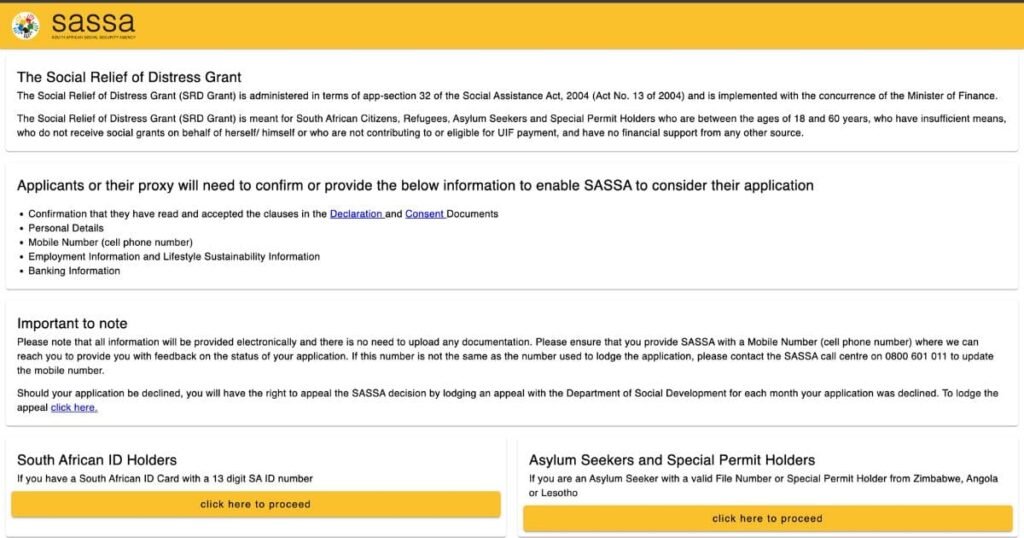
The south africa social relief grant application process 2026 is designed to be accessible both online and in-person. However, the online method is faster and recommended for those with internet access. Below is a detailed breakdown of how to navigate this process successfully.
Step 1: Prepare Your Personal Information
Before starting the application, gather all necessary personal information. You will need your South African ID number, mobile phone number, and email address. Ensure your phone number is registered in your name, as SASSA uses it for verification via OTP (One Time Pin).
Check that your ID is valid and not expired. An expired ID book or Smart ID card will cause an immediate rejection. If your ID is damaged or unreadable, visit the Department of Home Affairs to rectify this before applying for any grant.
Step 2: Access the Official Application Portal
For the SRD grant, navigate to the official SASSA SRD website. Be cautious of fake websites that mimic the official portal. The official URL usually ends with .gov.za. Avoid clicking on links from unsolicited SMS messages or social media ads.
If you are applying for a permanent grant like Disability or Old Age, you may need to visit a SASSA office. However, some regions allow online pre-application. Check the local requirements for your province. For the purpose of this guide, we focus on the standard digital process for relief grants.
Step 3: Complete the Online Form
Enter your ID number and mobile number on the landing page. You will receive an OTP on your phone. Enter this pin to verify your identity. Once verified, you will gain access to the application form.
Fill in all fields accurately. This includes your personal details, address, and banking information. Do not leave any mandatory fields blank. If a section does not apply to you, mark it as such if the option exists, or leave it blank only if instructed. Inconsistencies in data entry are a common cause of rejection.
Step 4: Submit Banking Details
You must provide valid banking details for payment. SASSA prefers direct bank deposits. You can choose to receive payment via cash send methods, but a bank account is more secure. Ensure the name on the bank account matches the name on your ID exactly.
If you do not have a bank account, you can select the cash send option. However, be aware that this may involve fees when withdrawing money. Opening a basic bank account is often more cost-effective in the long run. Verify your account number twice before submitting.
Step 5: Review and Submit
Before hitting the submit button, review all your information. Check for typos in your ID number or bank account details. Once submitted, you will receive a confirmation message or reference number. Keep this reference number safe for future status checks.
After submission, your application enters the verification stage. SASSA will cross-check your details with other government databases. This process can take several weeks. Do not reapply multiple times while waiting, as this can reset your queue position or flag your profile for fraud.
In-Person Application Options
For those unable to apply online, visiting a SASSA office is an option. Bring all your original documents and certified copies. Arrive early as queues can be long. A SASSA officer will assist you in filling out the forms manually.
This method is slower than online application but provides immediate human assistance. It is recommended for elderly citizens or those with disabilities who find digital platforms challenging. Ensure you get a stamped receipt or proof of submission from the officer.
Documents Needed for South Africa Social Relief Rrant Application Process 2026
Having the correct documentation is critical for the south africa social relief grant application process 2026. Missing documents are the leading cause of application delays. Ensure you have both original and certified copies where required.
Identity Documentation
Your South African Green Barcoded ID Book or Smart ID Card is mandatory. Temporary identity documents are sometimes accepted but may require additional verification. Foreign nationals must provide valid permits and refugee documentation.
Copies of your ID must be certified if submitting in person. Certification must be done by a commissioner of oaths, police officer, or post office official. The certification stamp must be clear and recent, usually within the last three months.
Proof of Income and Means Test
You may be asked to provide proof of income or lack thereof. This can include bank statements for the last three months. If you are unemployed, a sworn affidavit stating you have no income may be required.
For disability grants, medical reports and assessment forms from state doctors are necessary. These documents must be completed by the designated medical practitioners. Private medical reports are not always accepted unless requested by SASSA.
Proof of Residence
Proof of residence confirms you live in South Africa. Acceptable documents include utility bills, lease agreements, or letters from community leaders. The document must show your name and physical address.
If you live with family and do not have bills in your name, an affidavit from the homeowner confirming your residence may be accepted. Ensure the address matches what you put on your application form. Discrepancies here can trigger fraud alerts.
File Formats and Upload Tips
When applying online, you may need to upload documents. Acceptable formats are usually PDF, JPG, or PNG. Ensure files are not too large, as the system may reject them. Scan documents clearly so that text is readable.
Blurry or cropped images often lead to rejection. Take photos in good lighting if scanning is not available. Name your files clearly, such as “ID_Copy” or “Bank_Statement”. This helps officers process your application faster if manual review is needed.
Common Problems and Solutions South Africa Social Relief Rrant Application Process 2026
Applicants often face hurdles during the south africa social relief grant application process 2026. Understanding these common problems allows you to troubleshoot effectively. Most issues have standard solutions if addressed promptly.
Application Status Errors
You may encounter statuses like Pending, Declined, or Failed. A Pending status means your application is still being verified. This is normal and can take up to 30 days. Do not panic if it remains pending for a few weeks.
A Declined status means you did not meet the criteria. Common reasons include having income detected in your bank account or being registered for another grant. You have the right to appeal this decision. A Failed status usually indicates a technical error or incomplete information.
Payment Delays and Banking Issues
Payment delays often occur due to incorrect banking details. If SASSA cannot deposit the money, the payment will bounce. You will be notified to update your banking information. Log in to the portal and correct your account number immediately.
Sometimes payments are delayed due to high volumes during peak periods. SASSA releases payments in batches. Check the official payment dates to see when your specific batch is scheduled. If your payment is significantly late, contact SASSA support.
Reconsideration and Appeals Process
If your application is declined, you can request reconsideration. This must be done within a specific timeframe, usually 30 days from the decline date. Log in to the SRD website and select the reconsideration option.
Provide additional information to support your appeal. For example, if you were declined due to income, provide proof that the funds in your account were a loan or irregular deposit. The Independent Tribunal for Social Assistance Appeals (ITSAA) handles further appeals if reconsideration fails.
Identity Verification Failures
Sometimes the system cannot verify your identity against Home Affairs databases. This happens if your details are outdated. Visit the Department of Home Affairs to update your marital status or address.
Once updated, wait a few days for the systems to sync before reapplying. Trying to apply repeatedly while the data is mismatched will not work. Patience is required when dealing with inter-departmental data issues.
Important Tips and Warnings
Protecting yourself and your grant status is just as important as applying. There are many scams targeting grant applicants. Following these tips ensures you remain compliant and safe throughout the south africa social relief grant application process 2026.
Avoiding Scams and Fraud
Never share your ID number, OTP, or banking password with anyone. SASSA officials will never ask for your PIN. Be wary of individuals claiming they can expedite your application for a fee. All SASSA services are free.
Ignore messages asking you to click links to claim urgent grants. These are phishing attempts designed to steal your data. Only use the official website or visit a physical office. Report any suspicious activity to the SASSA fraud hotline.
Payment Dates to Watch
SASSA publishes payment schedules monthly. SRD grants are usually paid towards the end of the month, while permanent grants are paid early in the month. Mark these dates on your calendar.
Do not queue at ATMs on the first day of payment if you can avoid it. Staggered payment dates help reduce crowds. If you use a cash send option, collect your money within the specified period to avoid cancellation.
Mistakes That Lead to Rejection
Providing false information is the fastest way to get banned. If you have income, declare it. If your circumstances change, update SASSA immediately. Failure to report changes can lead to overpayment, which you will be required to pay back.
Another common mistake is not checking your status regularly. Log in at least once a month to confirm your application is still active. Some grants require periodic confirmation of continued eligibility. Ignoring these requests can lead to suspension.
Keeping Your Details Updated
If you change your phone number or bank account, update it on the portal immediately. Payments will not be redirected automatically. You are responsible for ensuring SASSA has your current details.
Regularly check your communication channels. SASSA may send SMS notifications regarding your application. Ensure your phone has airtime and can receive messages. Missing a verification SMS can delay your process significantly.
Frequently Asked Questions (FAQ)
Applicants often have similar questions regarding the south africa social relief grant application process 2026. Below are answers to the most common queries to help clarify any remaining doubts.
How Long Does the Application Take to Process?
Processing times vary depending on the volume of applications. Typically, it takes between 30 to 90 days for a final decision. SRD grants may be processed faster than permanent disability grants. Patience is required during peak periods.
Can I Apply for More Than One Grant?
You cannot receive two social grants for yourself simultaneously. For example, you cannot receive the SRD grant and the Old Age Grant at the same time. However, you can receive a grant for yourself and manage a Child Support Grant for your dependent.
What Happens If I Lose My Phone Number?
If you lose access to the phone number used for application, you must update it. This usually requires visiting a SASSA office with your ID for security verification. You cannot change the number online without access to the old number for OTP verification.
Is the SRD Grant Permanent?
No, the SRD grant is temporary relief. It is subject to annual renewal and government budget approval. Applicants must reconfirm their need periodically. Permanent grants like Disability or Old Age are long-term but require periodic reviews.
How Do I Check My SASSA Status?
You can check your status on the official SRD website using your ID and phone number. Alternatively, you can visit a SASSA office or use the WhatsApp helpline if available. Regular status checks help you track your application progress.
Conclusion
Preparing for the south africa social relief grant application process 2026 requires attention to detail and patience. By understanding the requirements, gathering the correct documents, and following the step-by-step guide, you increase your chances of success. SASSA is there to support vulnerable South Africans, but the system relies on accurate information from applicants.
Take action today by verifying your ID and checking your eligibility. Do not wait until the last minute to apply, as delays can impact your financial stability. Remember to protect your personal information and avoid scams.
This guide serves as your authoritative resource for navigating the social security landscape. While policies may evolve, the fundamental principles of honesty and accuracy remain constant. Stay informed, keep your details updated, and utilize the official channels for all your grant needs. With the right preparation, you can access the support you need to manage difficult times.
1. How To Apply For SASSA SRD R350
2. SASSA SRD R350 Application – Complete Guide
3. Is SASSA R370 Grant Still Available?
4. SASSA R350 Grant Application
5. How To Apply for SASSA R350 Grant Online